WTP

What is a Water Treatment Plant?

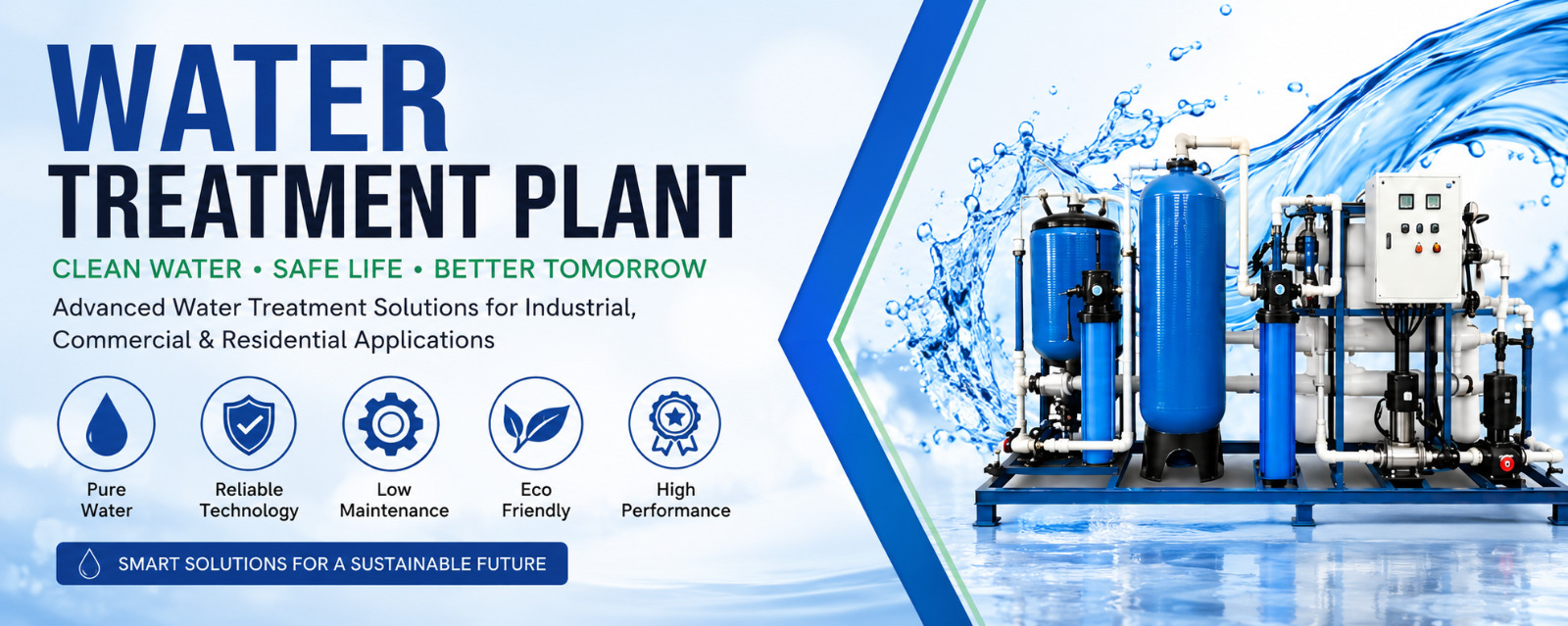
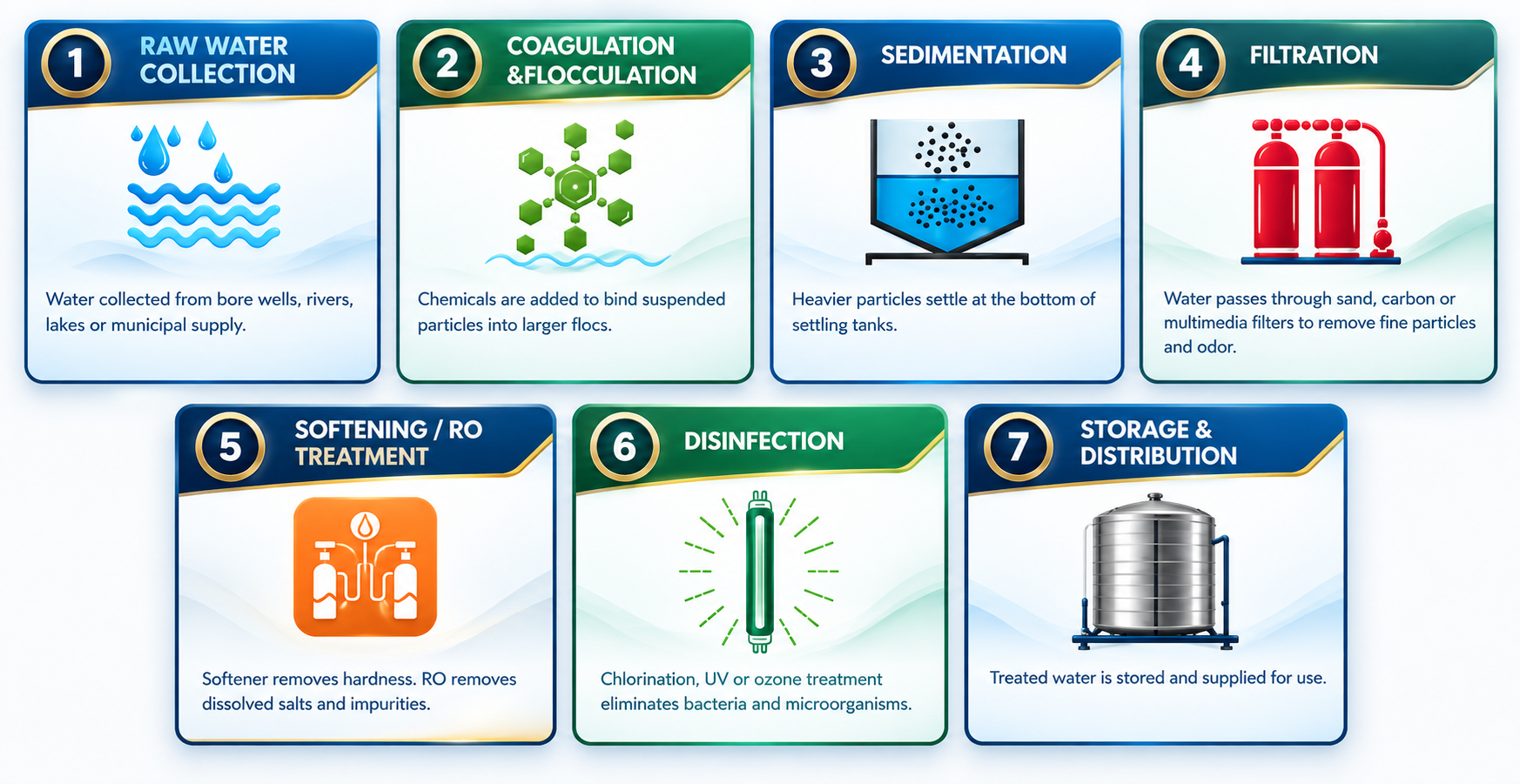
A Water Treatment Plant (WTP) is a system designed to treat raw water obtained from sources such as bore wells, rivers, lakes, or municipal supply and convert it into clean, safe, and usable water for industrial, commercial, or potable applications.

TYPICAL WATER TREATMENT PROCESS
TYPES OF WATER TREATMENT PLANTS
ChatGPT Image Jul 29, 2026, 05_26_58 PM

RO PLANT

Removes dissolved salts and produces purified water.

ChatGPT Image Jul 29, 2026, 05_28_01 PM

SOFTENER PLANT

Reduces water hardness caused by calcium and magnesium.

ChatGPT Image Jul 29, 2026, 05_28_54 PM

DM PLANT
(DE-MINERALIZATION)

Produces high-purity water for boilers and pharmaceuticals.

ChatGPT Image Jul 29, 2026, 05_31_51 PM

UF / UV SYSTEMS

Used for ultrafiltration and microbial control.

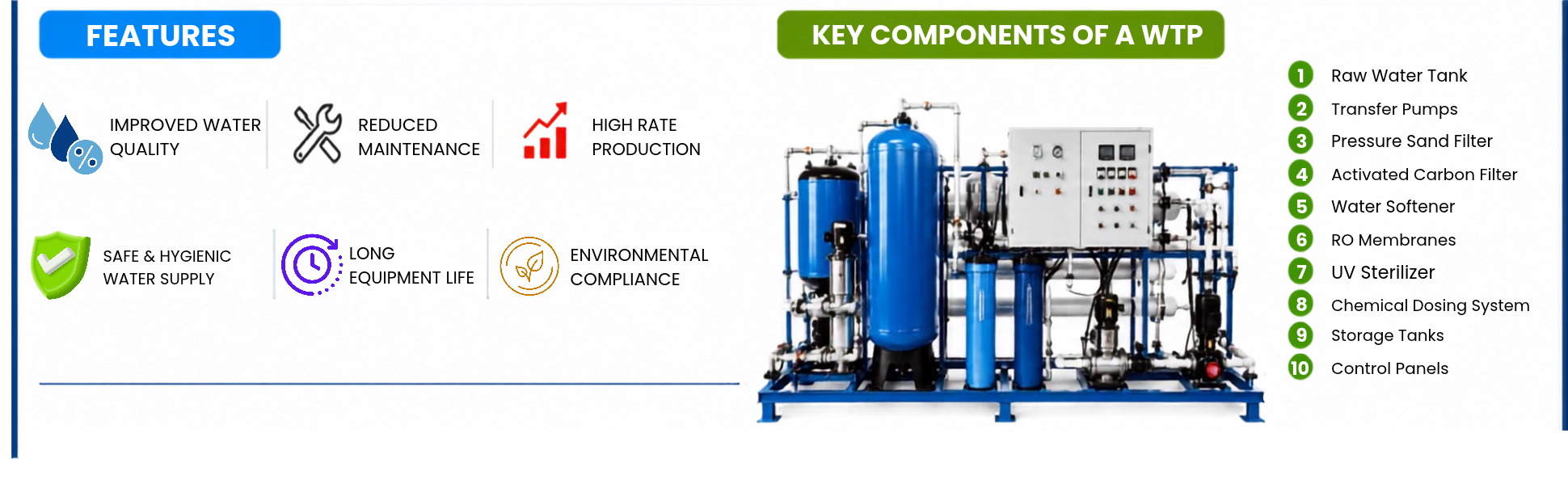
Purpose of a WTP

To provide safe and clean water

To improve water quality for industrial processes

To protect equipment from scaling and corrosion

To remove turbidity, contaminants, and microorganisms

To meet environmental and health standards

A world of entertainment
available wherever you are.

Applications

Conclusion

A Water Treatment Plant (WTP) plays a critical role in providing clean, safe, and reliable water for industrial, commercial, and residential applications. A properly designed WTP improves operational efficiency, protects machinery, reduces maintenance costs, and supports sustainable water management practices.